


Valve selection for hydrogen – What makes hydrogen uniquely challenging?
Small-molecule yet energy-dense hydrogen places exceptional demands on valve tightness, component materials, and in many cases high-pressure capability.
Hydrogen’s small molecular size sets special requirements for valves
Hydrogen is one of the smallest molecules found in nature, which makes controlling it unusually demanding. All connections must be completely leak-tight, because even a minor gas leak can create a safety risk—especially during refueling, where the end user is in direct contact with the system. In addition, any leaking hydrogen is also wasted energy.
Hydrogen’s small molecular size also allows it to diffuse into lower-grade stainless steels. This phenomenon is known as hydrogen embrittlement. Over time, high pressure can create internal microcracks in the material; hydrogen molecules can penetrate these cracks and weaken the metal structure of components.
What makes Swagelok® 316/316L stainless steel compatible with hydrogen systems?
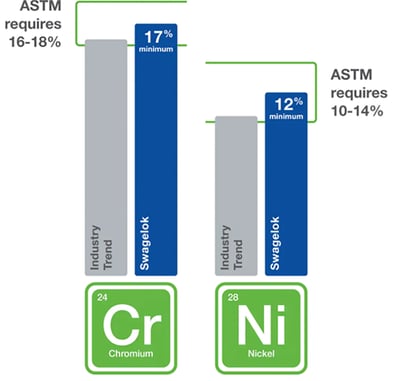
Our products are manufactured from carefully optimized alloys that contain multiple elements to achieve the best possible corrosion resistance and mechanical performance. Swagelok® 316/316L stainless steel typically contains higher chromium and nickel levels than the industry average—an important factor for corrosion resistance, ductility, and helping to reduce the risk of hydrogen embrittlement.
Swagelok valves for hydrogen applications
In general, Swagelok® valves can be used in hydrogen assemblies—provided the overall system is well understood, the requirements are taken into account, and the appropriate sealing materials and leak-tightness classes has been taken into account.
This page shows only a few examples of our valves for hydrogen service. If you don’t find a suitable product, contact us and we’ll help you select the right option.
Typical hydrogen infrastructure applications
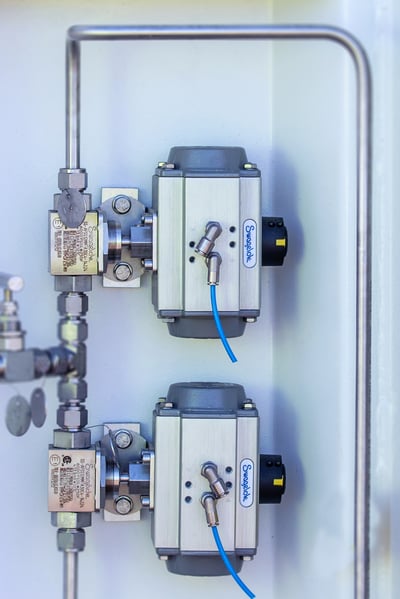
Hydrogen infrastructure applications include dispensers, storage cylinders, compressors, separators, pressure regulators, and hydrogen tube trailers that transport hydrogen to stations.
Components used in passenger cars, vans and heavy-duty trucks, buses, rail transport, marine applications and aerospace may require EC-79 certification for use above 30 bar (435 psig) operating pressures. See also: EC-79 transition to ISO 19887-1.
You can find products for these applications here:
Ball valves for hydrogen applications
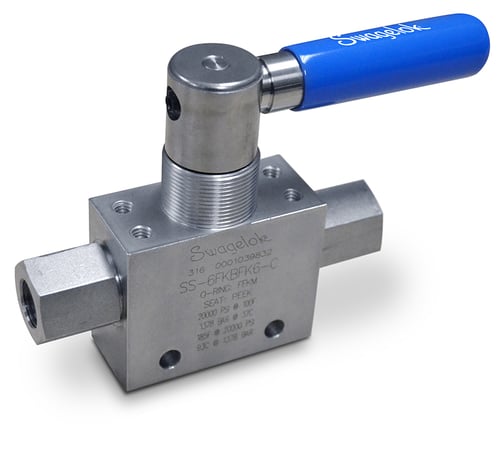
Ball valves are commonly used in hydrogen systems for starting and stopping hydrogen flow. When selecting ball valves for hydrogen service, special attention should be paid to stem sealing design and wear resistance.
A good solution may include:
- a trunnion-mounted ball
- a live-loaded design to ensure sealing integrity at every open/close cycle
- a bottom-loaded stem to reduce the risk of stem blowout and improve safety
Hydrogen-compatible ball valves are available for 2-way and 3-way applications, with multiple end connections and flow capacities.
Links to ball valves (examples):
Needle valves in hydrogen service
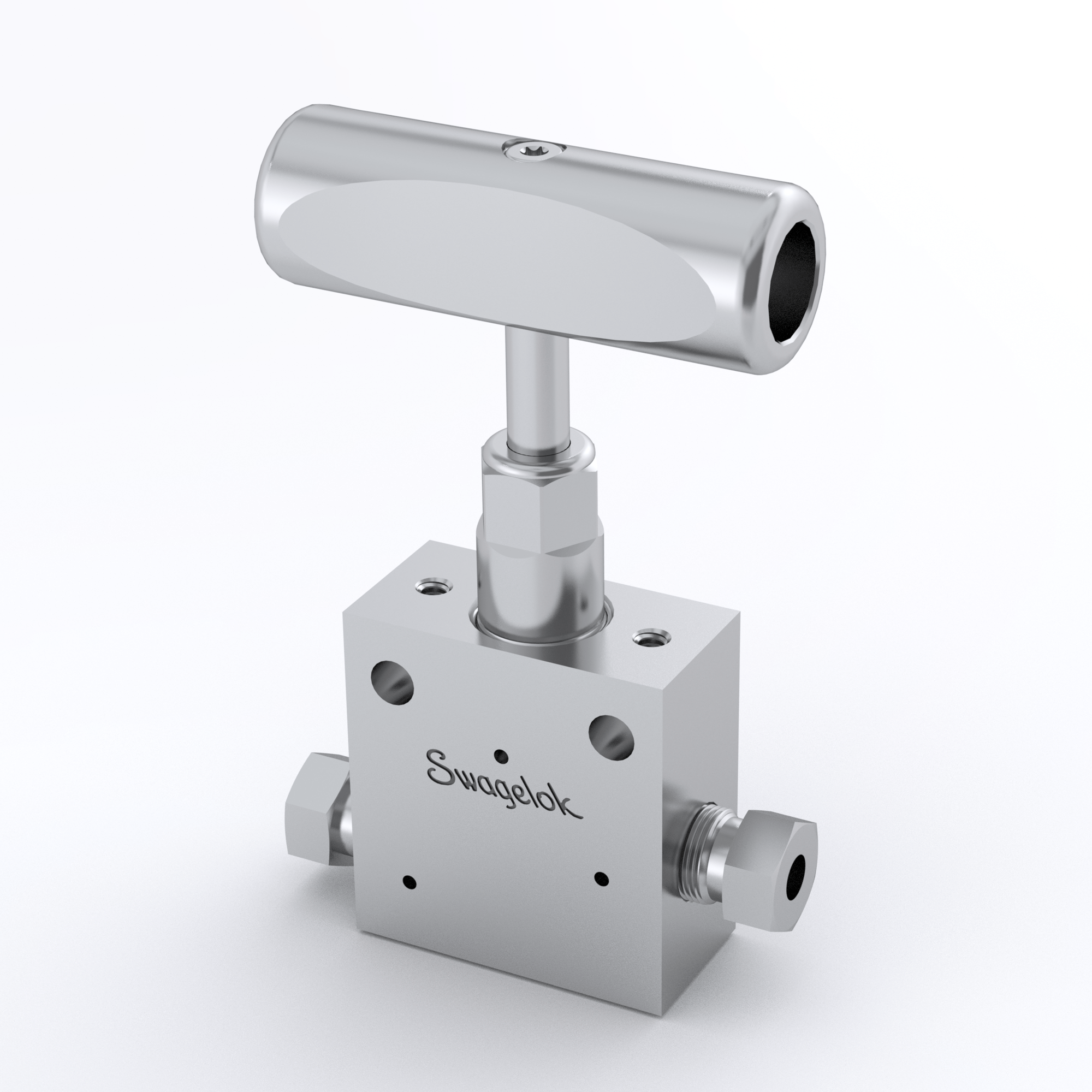
Needle valves are used for flow control in hydrogen applications, but they must be selected with particular care. Many needle valves are all-metal designs and require high closing force to achieve tight shutoff. Over time, this can deform the needle or seat, increasing maintenance needs and potentially creating a safety risk.
High closing force often also requires larger actuators, and full opening/closing can take up to two minutes.
For hydrogen service, choose:
- a needle valve made from high-quality 316 stainless steel
- a design that withstands repeated cycling without deformation
- a pressure rating suitable for 350/700 bar operating pressures
As with ball valves, compatibility with other hydrogen-approved components is essential.
Contact us
Interested in Swagelok hydrogen compatible valves?
You can fill in the contact form and we will get back to you shortly. You can also use the open text box to leave us more information about your other project needs.



Check valves and regulators for hydrogen applications
FK Series check valves play a key role in hydrogen fueling station compressors. They improve system safety by preventing excessive backflow and protecting both equipment and the end user.
In hydrogen service, check valves are exposed to much more demanding conditions than in many traditional applications. Many check valves use springs typically made from cold-worked materials, which may be more susceptible to hydrogen embrittlement than high-quality 316 stainless steel.
In vehicle fueling applications, valves must also withstand large and rapid temperature and pressure changes. These dynamic conditions put particular stress on elastomer seals and can shorten their service life.
For these reasons, ball-type check valves are often a more reliable and durable choice for hydrogen compressor applications.
The Swagelok® RAMP regulator is designed for demanding service. It provides high flow capacity and precision control for high-pressure hydrogen applications.
Its innovative, patented design simplifies maintenance and supports long-term reliability—helping to reduce downtime and operational costs.
Product links:
- RAMP regulator (link)
- FK Series check valves (link)

Choose our team alongside yours
Benefit from our expertise in instrumentation systems
Our engineers, trainers, support staff and assemblers are dedicated to helping you maintain safe and efficient operations.
Field engineering services - Identify, diagnose and resolve problems such as leaks and other challenges. Can also assist with design and component selection for challenging systems.
Pre-assemblies - Receive a customized assembly from engineers and installers in our offices - assemblies pre-tested for leakage.
Training - Connector installation and pipe bending, basic hose selection, valve selection and pipe joint installation and inspection are some of the training courses we offer at our office - you can also choose private training.
Support - Our highly trained customer service and product support staff can help with product selection and other needs.
Let's solve your challenges together. For the most challenging cases, we have the support of Swagelok's global network of field engineers with specialist expertise in a variety of fields.