


What kind of tube fitting does hydrogen as a process fluid require?
Small molecular but energy-efficient hydrogen requires not only particularly tight connections, but also high pressure resistance and high-quality component materials.
Fitting selection is defined by operating conditions in hydrogen systems
In hydrogen systems, fittings are required above all to provide tightness, strength and long-term reliability. Hydrogen molecyle can easily escape through the tiniest of crevices and diffuse into the materials designed to contain them.
As a baseline, Swagelok® products, including standard Swagelok two-ferrule tube fittings, are suitable for hydrogen systems due to their materials and design. Other connection options may include the Swagelok FK fitting, specifically designed for hydrogen systems, or cone & thread fittings.
At the end of this page, you’ll find a fitting comparison table that helps you evaluate different fitting options for hydrogen applications.
As operating conditions become more demanding, the importance of selecting the correct fitting type increases significantly.
Hydrogen applications where fitting selection is critical
-
High pressures (hundreds of bars, up to more than 700 bar)
-
Repeated pressure and temperature cycles (e.g. refuelling, depressurisation and refilling)
-
Vibration and motion (vehicles, moving equipment, compressors)
-
Long service life and minimal maintenance
-
Critical safety requirements where even a small leak is a risk
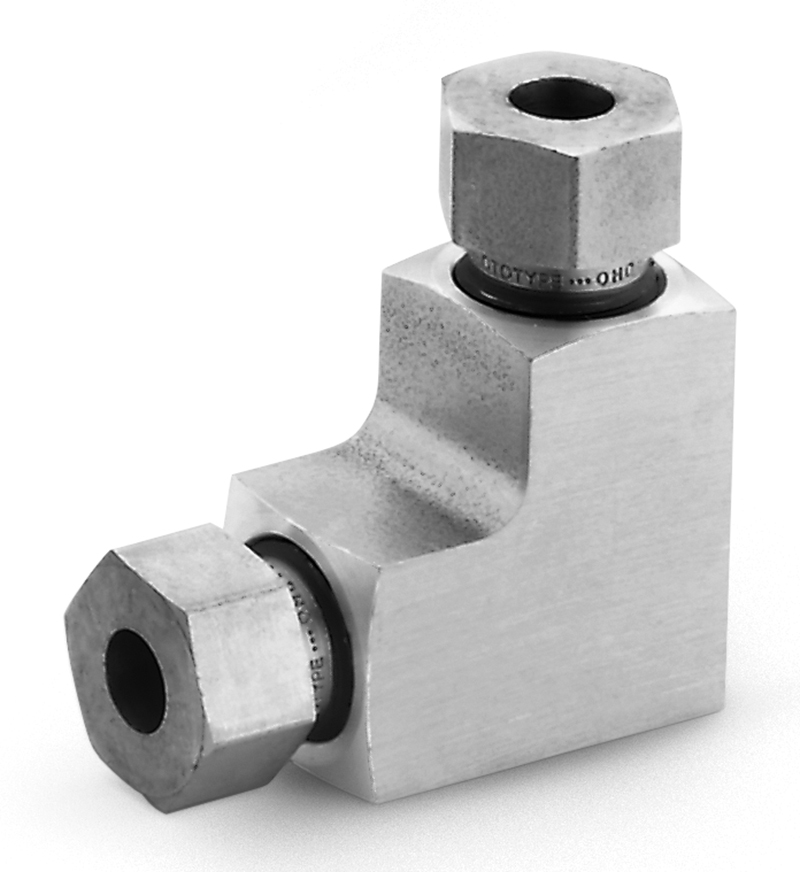
What makes the Swagelok® two-Ferrule tube fitting compatible with hydrogen systems?
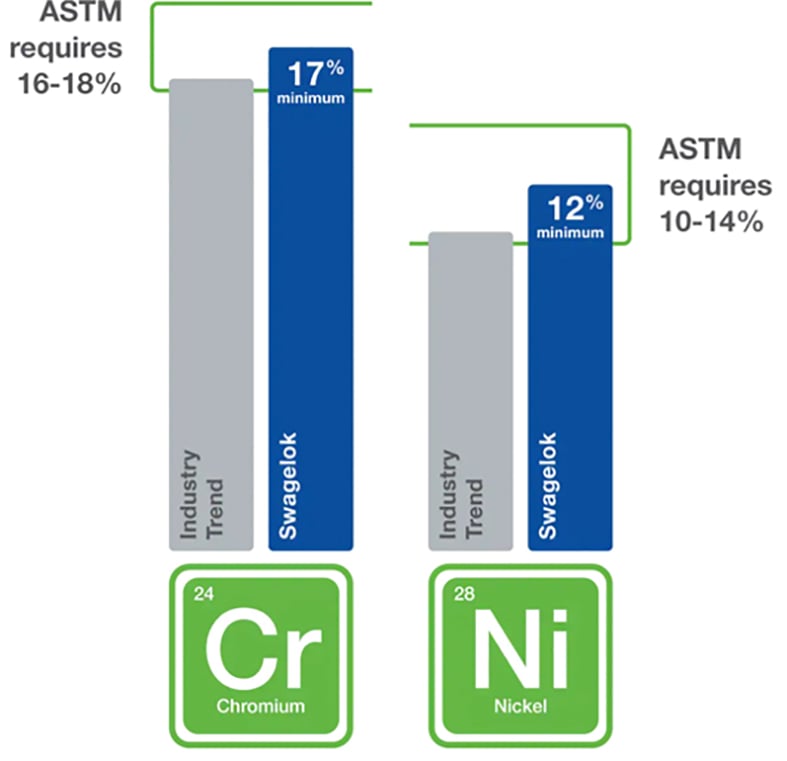
Swagelok® fittings are manufactured from carefully optimised metal alloys containing multiple alloying elements to achieve superior corrosion resistance and mechanical performance.
Swagelok® 316/316L stainless steel contains higher-than-industry-average levels of chromium and nickel. This is a key factor in:
-
corrosion resistance
-
ductility
-
resistance to hydrogen embrittlement
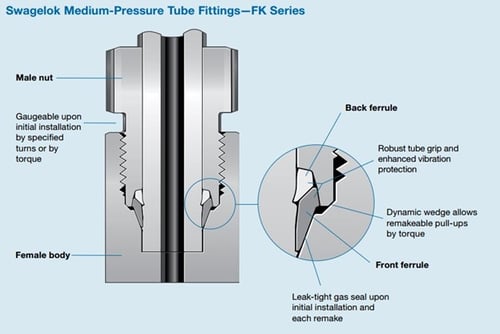
The Swagelok two-ferrule design leverages advanced metallurgical expertise to optimise fitting performance. One example is the SAT 12 metallurgical process used for the back ferrule. This process selectively hardens the leading edge of the back ferrule while keeping the centre and rear sections softer.
The result:
-
improved grip
-
enhanced vibration resistance
-
controlled flexibility in the joint
During installation, the softer centre section acts as a hinge point as force is applied to the back ferrule, contributing to consistent and reliable make-up.
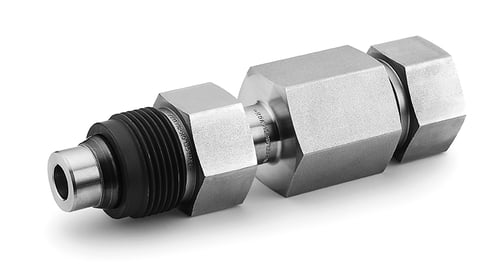
Swagelok FK Fitting – When maximum hydrogen performance is required
The Swagelok FK Series tube fitting has been developed specifically to address the unique challenges of hydrogen service. It does not replace traditional fittings in every application, but it offers clear advantages when operating conditions are technically demanding.
The FK fitting is particularly well suited when:
- pressures are extremely high
- the system is exposed to severe vibration
- temperature fluctuates rapidly and across a wide range
- leak tightness is a critical safety factor
- long system lifetime is required
In these situations, the FK fitting’s dual-ferrule design, high tube grip strength, excellent vibration resistance, and hydrogen-optimised materials provide additional safety and predictability across the entire system.
The Swagelok FK fitting meets hydrogen industry standards and is certified by the European Integrated Hydrogen Project (EIHP). It is part of a broader hydrogen system solution that also includes:
- ball valves
- needle valves
- check valves
- relief valves
- double block and bleed valves
Contact us
Interested in Swagelok hydrogen fittings?
You can fill in the contact form and we will get back to you as soon as possible. You can also use the open text box to leave us more information about your other project needs.



What about the use of cone & thread fittings?
Cone & thread fittings are still used in certain ultra-high-pressure hydrogen applications. However, they:
- are more labour-intensive to install
- require higher skill levels and specialised tools
- are more prone to installation errors
- offer lower fatigue resistance compared to FK fittings
They are typically used only when system requirements or existing standards specifically demand them.
Comparison of hydrogen fitting options
To make differences between fitting types easier to understand, we’ve compiled a comparison of FK fittings, Swagelok two-ferrule fittings, and cone & thread fittings below.
| Fitting type | Installation time (min) | Pressure range | Temperature range | Vibration resistance | Installation error risk | Lifecycle cost |
| FK fitting | 0.54 | up to 1378 bar / –28 to 37 °C | max. 538 °C | ≥10 million cycles in rotary flex test; meets ASME i ≤ 1.3; superior to cone & thread (also with AV collar) | Very low (pre-assembled) | Low–medium |
| Swagelok two-ferrule fitting | 0.54 | Tube-dependent | max. 537 °C | No published rotary flex fatigue data (depends on tubing and installation) | Low | Low |
| Cone & thread fitting | huhti.53 | up to 4134 bar / –51 to 37 °C | max. 371 °C | Lower fatigue resistance in rotary flex test; AV collar improves performance but remains below FK level | Higher | Medium–high |
In demanding hydrogen applications, FK fittings often pay for themselves through higher reliability, improved safety, and lower lifecycle costs.
Our technical sales team is happy to assist with product selection. You can always contact us by phone, email, or via the contact form above.