Skip to content
main-menu
close-swagelok
Swagelok Helsinki
Koivulehdontie 3a, Vantaa | +358 9 777 1110 | info@swagelok.fi

A Shared Mission for the user safety and longevity of CNG Gas Stations

What is our cooperation with our client Virši like? What has happened since the last article? Why intermixing of component is risky?

Virši - Latvian service station pioneer

Virši is one of the largest service station operators in Latvia, with 31 years of experience in the industry and 75 outlets, 73 of which are service stations. The service station network also includes CNG/LPG and electric vehicle charging stations in addition to the regular filling stations.

We are united by our desire to develop safe systems

Our relationship with Virši is relatively recent, but even more active. We are united by our desire to develop systems that are as leak-proof, safe and of the highest quality as possible, thus ensuring the best possible operational safety for our customers. Based on several joint studies, our staff already know each other well and work well together over the phone and in the field.

VIRSI1small

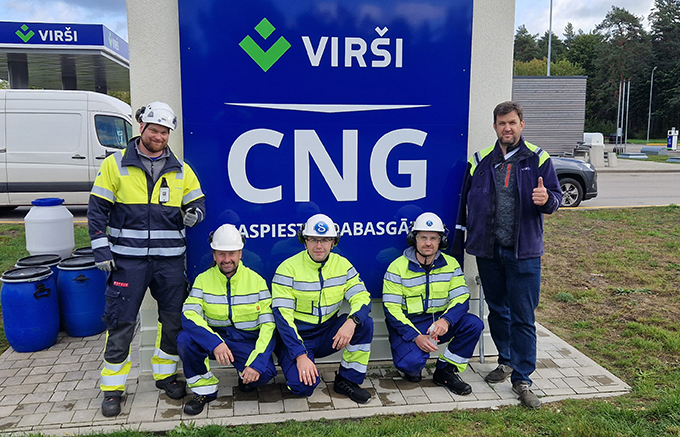
Pictured from left to right: Janne Räty (Swagelok field engineer), Vytautas Navickas (Swagelok field engineer, Baltic States), Matiss Vaivods (Swagelok sales engineer, Latvia), Oskar Breilin (Swagelok field engineer), Edgars Šulckis (gas systems specialist in Virši).

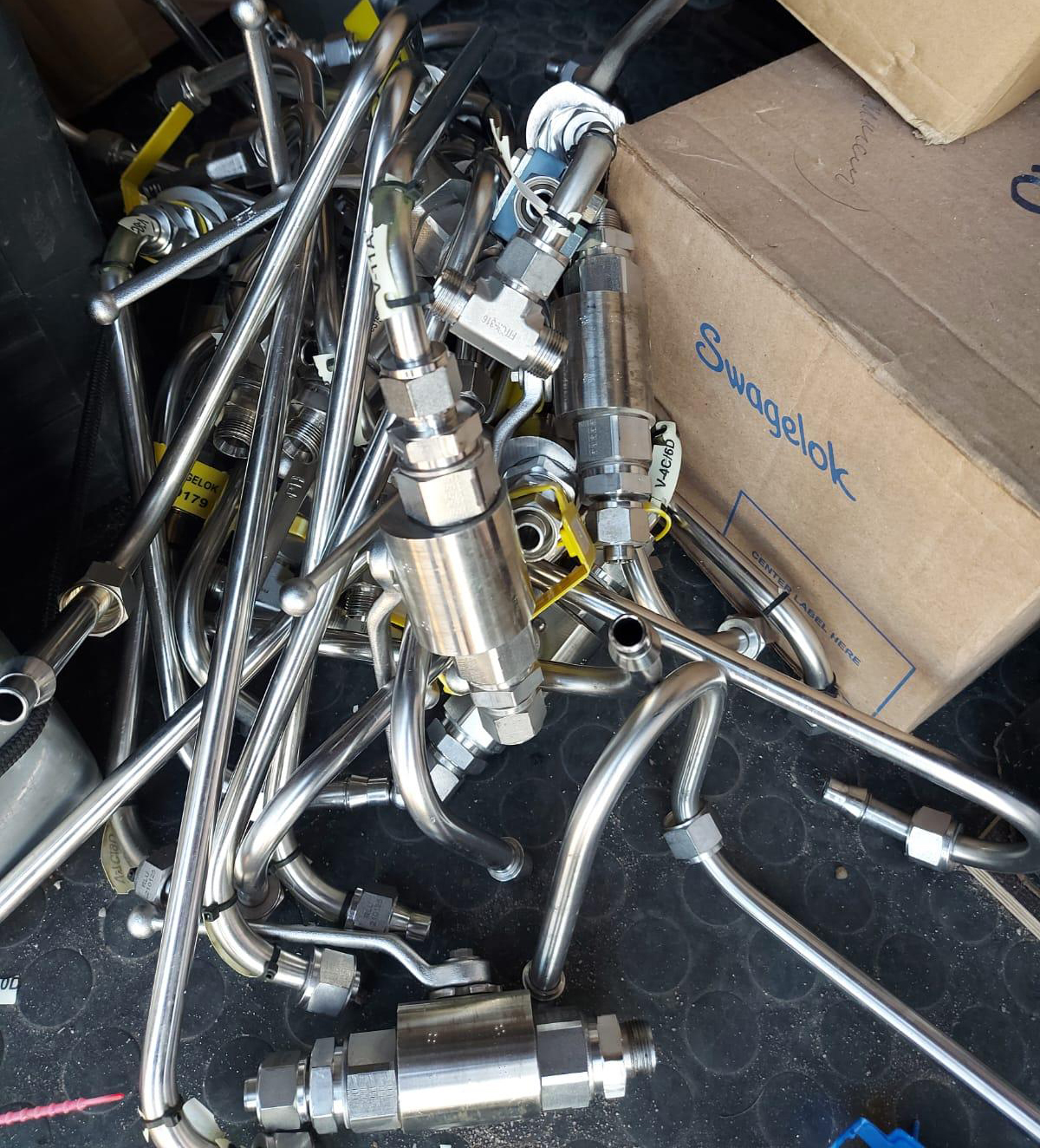
dismantled-system-components-instrumentation
The figure shows dismantled and repaired component parts based on the results of the studies.

Customer concerned about mixed components in their new system

Our client Virši operates several CNG (Compressed Natural Gas) filling stations across Latvia. In the autumn of 2023, Virši staff attended a Swagelok Fitting Installation and Tube Bending Training, where they became aware of the risks of intermixing and recognized that this issue should be proactively addressed to prevent it from occurring in gas stations. Consequently, a test inspection of one station was agreed and, after successful cooperation, it was decided to extend the inspections to cover all nine stations in the country.

The gas distribution stations covered by the analysis are relatively new and in excellent condition. The gas station consists of various fittings, pipes, valves, meters, compressors and gas tanks. The gas distribution stations have been delivered to Virši as complete applications from the supplier, but Virši aims to further enhance and future-proof the safety of its operating systems.

"When designing or ordering an application from a supplier, it is advisable to choose well-known and reliable suppliers as partners to ensure easy installation and maintenance in the future. Mixing parts from different suppliers' products is impractical and would invalidate the warranty of the suppliers' components." Says Matiss Vaivods, field engineer at Swagelok Helsinki.

What is the major safety risk in mixing parts of an instrumentation component?


Mixing component parts involves a high risk of leakage due to product incompatibility and manufacturing quality.

  • There is no uniform industrial design standard for pipe fittings and companies manufacture components based on their own designs.
  • After intermixing, it can be difficult to assess the performance of the product and the appropriate temperature and pressure ranges.
  • The supplier's assembly and installation instructions do not apply to mixed products.
  • The supplier's warranty is not valid for mixed products.
  • Product incompatibility and varying production quality can create a significant safety and leakage risk and lead to increased costs and environmental damage.
  • Harmonisation of component manufacturers will ensure uniform installation and maintenance procedures, which will increase the safety and ease of use of the system.
TechnicalIdea_OutlineCircle_Green369 (1)
virsi-gas-station-study-1
The picture shows the Swagelok field engineers' individual inspection report with pictures, giving the customer a clear and visual summary of the findings at the station.

Aiming for the safest possible refuelling station for consumer use

The client's objective was to ensure safe and efficient operation of the stations and to identify potential leaks, mixed instrument components and other system failures before the findings escalated into actual challenges and major maintenance events.

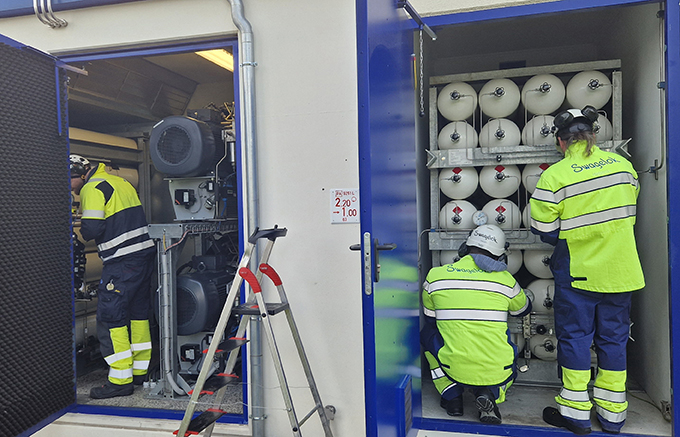
The Swagelok team carried out the inspections in two phases. The first station had already been inspected the previous year, followed by eight other stations over the course of a week. The inspections were carried out as a team effort together with Virsi, with a particular focus on:

  • Detecting leaks and intermixing
  • Assessing the condition of pipelines and joints
  • Documenting findings related to the safety and operational condition of systems

An individual inspection report with pictures was prepared for each station to provide the customer with a clear and visual summary of the station-specific findings.

swagelok-helsinki-system-analysis
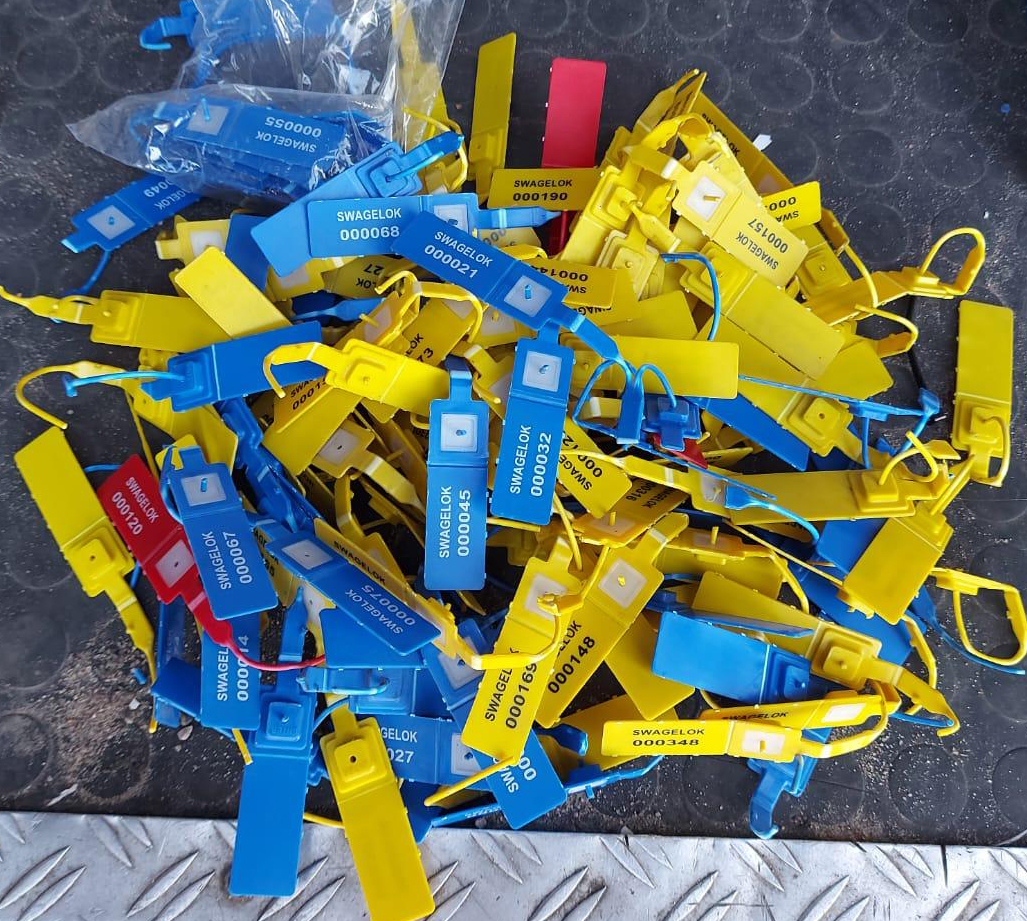
The picture shows the labelling tags used in the study with colour codes and target numbers, which allow the client to return to the report to check the more detailed observations and labelling made by the field engineer.
improvement proposal from the field engineer study2
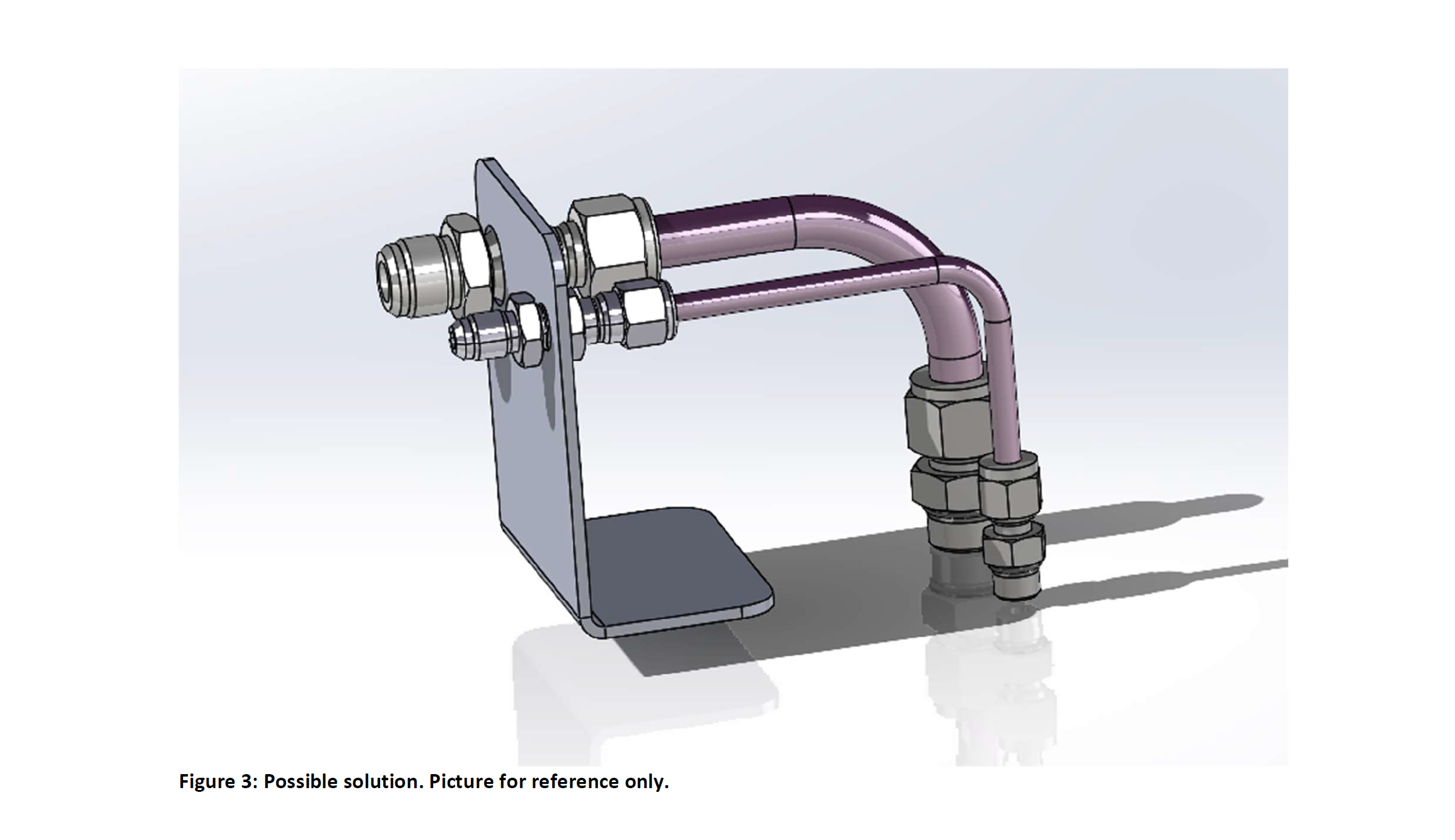
Suggestions for improvement in the survey report will be illustrated in 3D drawings, so that the customer receives the information in the best possible detail.

Correcting findings reduces future maintenance needs and improves the predictability of the maintenance budget


The inspections went according to plan and without any major surprises. The customer's systems are relatively new and still in good condition. The client received a comprehensive overview of the status of the stations and prioritised recommendations for possible repair actions. A total of 240 discoveries were made at eight gas stations.

The findings included the following observations:

  • Mixed component parts (yellow tag)
  • Leakage (red tag)
  • Other observations (blue tag)
    • Component parts are of different materials
    • Excess joint component
    • Solution is missing a support element
    • Recommended to replace with a better quality connector
    • Possibly damaged pipe
    • Corrosion

Findings also analysed as a roadmap

As part of the system development ideas, a roadmap or table has been prepared for each system discussed in the report, including estimates of the "cost of implementation", "relative value of change" and proposed "priority" based on the impact on the system.
All safety-related findings are automatically assessed as high impact. Says Field Engineer, Matiss Vaivods.

Below is the scale used for each roadmap:

Implementation cost Impact value
€ ≤ 500 Low
€€ ≤ 1000 Medium
€€€ > 1000 High

In Virši’s case, approximately 40% of the findings fell into the “high impact” category on the safety scale.


The study also helped the customer to plan maintenance and budgeting for the coming years

Based on the documentation, the client has repaired all the mixed parts to prevent leaks, warranty and maintenance challenges in the future. The study also helped the customer plan maintenance and budgeting for future years.

The inspections do not advocate replacing the findings with Swagelok components, but the mixed components can be replaced with consistent products from other instrumentation suppliers. It is important that the components in the system are from a single manufacturer and that the systems are built technically correct.

The collaboration showed how regular system inspection and documentation can support customer safety, efficiency and longevity of investment. The team's flexible approach and local presence in Latvia enabled the inspections to be carried out cost-effectively and reliably.

Find out more about how Swagelok field engineers can support you.